
Two Lineages, One Child: How Both Parents Shape the Genes and Epigenetics They Pass On


Most couples who come to me ask a reasonable question: how do we get pregnant? I would like to offer a larger one. How do we create the healthiest human possible, beginning months before conception?
That second question changes the whole conversation. It brings the father fully into the room. It turns the months before conception into a window of preparation instead of a waiting room. And it surfaces something the fertility conversation often leaves out entirely: your child inherits far more than a sequence of genes. Your child inherits the way those genes have been instructed to speak.
Biology is not destiny. It is dialogue. In this article I want to show you what is being said in that dialogue, from sperm and egg to the growing fetus, and how both partners can change it. Everything here is expanded, with a twelve week plan for two, in my new free ebook, Two Lineages, One Child, linked at the end.
Genes Are the Score. Epigenetics Is the Performance.
Every cell in your body carries nearly identical DNA, yet a neuron and a liver cell behave nothing alike. The difference is epigenetic. Epigenetic marks are chemical and structural instructions layered on top of DNA that tell each gene when to speak and when to stay quiet. Three layers matter most for fertility:
DNA methylation. Small methyl groups attach to DNA and usually quiet the gene beneath them. The raw material for those methyl groups comes from folate, B12, choline, and related nutrients.
Histone marks. DNA wraps around protein spools called histones. Chemical tags on the spools loosen or tighten the coil, opening genes for reading or closing them.
Small RNAs. Short RNA molecules fine tune which genetic messages are translated into proteins.
I often describe genes as light switches. Toxins, chronic stress, and depletion dim the light. Nourishment, safety, and rhythm turn it back up. What makes fertility so remarkable is that both sperm and egg carry some of those switch settings into the next generation.
Two Kinds of Inheritance
Your child receives two kinds of inheritance from each of you.
The first is the sequence: half of the DNA comes from each parent, and it is largely fixed. There is one important exception. Sperm stem cells keep dividing throughout the life of a man, and each division carries a small chance of a new copying error. Large family studies show that roughly four in five new single letter mutations in a child arise on the paternal side, and their number rises by about one to two for every additional year of paternal age. That finding is well established, and it is one reason I never treat the father as an afterthought.
The second is the instructions: methylation patterns, histone marks, and small RNAs that travel in sperm and egg alongside the sequence. Most of these are erased and rewritten after fertilization. Not all of them. And the environment in which the new marks are rewritten is the environment the two of you create.
You cannot rewrite the genes of your child. You can influence the first instructions those genes receive.
Three Generations Inside One Body
Here is a fact that reframes everything. A baby girl forms all of her eggs before she is born, with the supply peaking at roughly six to seven million around the middle of pregnancy.
That means when your grandmother was pregnant with your mother, the egg that would one day become you was already forming inside that fetus. Three generations shared one body, one bloodstream, and one environment. The same is true right now: a woman carrying a daughter is nourishing that daughter and the first cells of her future grandchildren. In a son, the stem cells that will one day make his sperm are also established during fetal life.
History recorded what this can mean. During the Dutch Hunger Winter of 1944 and 1945, a population that was well fed before and after endured months of famine. Children who were in the womb during that famine were followed for decades. As adults they carried different methylation on a key growth gene about sixty years later, along with higher rates of metabolic and cardiovascular problems than their siblings. Separately, a record study from a remote Swedish village found that the food supply of paternal grandfathers in their preteen years was associated with the longevity of their grandsons. That study was observational, so it cannot prove cause, but it pointed researchers toward the paternal line years before laboratory work caught up.
I want to be precise here. Effects from parent to child are well supported. True inheritance across several generations in humans is still debated. But the direction of the evidence is clear enough that I speak about fertility as legacy work.
His Lineage: What Sperm Actually Carry
A sperm cell takes about seventy four days to make in commonly cited estimates, followed by one to two weeks of maturation in the epididymis. The sperm that will meet the egg are being built roughly three months before conception. That gives every father an encouraging, concrete window: what he eats, breathes, drinks, absorbs, and how he sleeps and carries stress over those weeks is written into the cells that carry half of the inheritance of his child.
What is inside the sperm head is more sophisticated than most people imagine:
Packaging. About eighty five to ninety percent of sperm DNA is wrapped around tiny proteins called protamines, packed almost like a crystal.
Bookmarks. The remaining histones are not random. Research suggests they sit preferentially at genes that guide early embryo development, as if bookmarks were left in the most important chapters.
Messages. As sperm pass through the epididymis, they receive small RNAs from tiny vesicles. These are delivered into the egg at fertilization. In animal studies, changing the diet of the father changes this RNA cargo, and injecting that cargo alone into embryos reproduces metabolic changes in the offspring.
Sperm are also vulnerable. Their membranes are rich in delicate polyunsaturated fats, and mature sperm have almost no capacity to repair their own DNA. When oxidative stress outpaces antioxidant defense, DNA strands break. A standard semen analysis can look completely normal while DNA fragmentation, oxidative stress, mitochondrial strain, and toxic load are high. The semen analysis tells you whether sperm can reach the egg. It does not tell you what they carry. I ask couples to discuss a DNA fragmentation test with their urologist or fertility specialist.
Then there is the placenta. Some genes are expressed only from the paternal copy, and many of them drive placental growth. In mammals, embryos made with two maternal genomes fail largely because the placenta does not form properly. The contribution of the father does not end at conception. His imprinted genes help build the organ that feeds the baby for nine months.
Male factor contributes to about half of the couples who struggle to conceive, yet men are often tested later and prepared less. In my practice, both partners begin together.

Her Lineage: The Egg and Its Mitochondria
A woman is born with roughly one to two million immature eggs. About three to four hundred thousand remain at puberty, and only around four to five hundred will ever ovulate. Each egg pauses partway through its division before birth and remains paused for decades. When a follicle is recruited, the final stretch of growth to ovulation takes roughly three months. So her preparation window matches his: the egg that ovulates three months from now is growing today.
Three things happen during that window that matter enormously.
Mitochondria are loaded. The mature egg holds hundreds of thousands of copies of mitochondrial DNA, more than almost any cell in the body. The few dozen mitochondria in the sperm midpiece are tagged and cleared after fertilization. Every mitochondrion in your child, in the heart, the brain, and every muscle, descends from the egg. Until implantation, the early embryo runs largely on the energy the egg brought with it.
Maternal imprints are written. Imprinted genes speak only from one parent. Maternal imprints are established during the growth phase of the egg, which is exactly the months leading to ovulation. Writing them depends on a steady supply of methyl groups. In animal studies, maternal diets low in methyl nutrients alter imprint establishment in the egg.
The follicle reflects her body. Follicular fluid is a protective microenvironment rich in antioxidants and melatonin. It also mirrors the rest of her physiology. High insulin and glucose, inflammation, and chemicals including bisphenols, PFAS, and phthalate byproducts have all been measured in follicular fluid, and several are associated with poorer egg and embryo quality in IVF research.
A note for families built with donor eggs or donor sperm: the person who carries the pregnancy still shapes gene expression through the uterine environment, the immune environment, and the microbiome. Genetics is one form of inheritance. Expression is another, and it begins with you.
The Meeting: Erasing, Rewriting, and Imprinting
Within hours of fertilization, a quiet reset begins. Most methylation from sperm and egg is cleared so the embryo can become a cell capable of forming every tissue. The paternal genome is cleared quickly and actively; the maternal genome more gradually over the first cell divisions. Around implantation, new methylation is written across the genome.
Reprogramming is incomplete by design. Roughly one to two hundred imprinted genes keep their parent of origin marks, and many of them govern growth, metabolism, the placenta, and the brain. When an imprint is lost or doubled, rare imprinting disorders follow. Pregnancies conceived through assisted reproduction show a modestly higher relative rate of some imprinting disorders while the absolute risk remains low, and researchers are still separating the role of procedures, embryo culture, and the underlying infertility.
The lesson is elegant: the months before conception and the first days of life are when imprints are written and protected. In animal studies, a low protein diet given only in the few days before implantation changes growth, blood pressure, and behavior of offspring into adulthood. That is why I never ask couples to start a cleanse, a fast, or an aggressive protocol around ovulation. Pregnancy is a state of construction, not cleansing.
Methylation: The Shared Ink
The methylation cycle turns food into SAMe, the universal methyl donor. It depends on folate, B12, B6, B2, choline, betaine, zinc, magnesium, and methionine. When it runs short, homocysteine accumulates, and elevated homocysteine is associated with poorer egg, embryo, and sperm quality, recurrent loss, and placental problems.
This one pathway supplies the ink for every mark both of you pass on. He uses it to write sperm methylation. She uses it to write imprints in the growing egg. The embryo uses it to rewrite its genome after the reset, and the placenta and fetal brain use it every day of pregnancy.
Common variants in genes such as MTHFR slow one step of folate activation. They are very common, and many carriers have healthy pregnancies. I read genetic panels as information about function and protection, never as doom. My order is always function first: homocysteine, RBC folate, B12 with methylmalonic acid, and intracellular nutrient testing tell me how the pathway is actually performing. The genetic report then guides food and the form of each nutrient.
Timing matters here. The neural tube, the beginning of the brain and spinal cord, closes by about day twenty eight after conception, often before a missed period. Folate status in the months beforehand clearly lowers the risk of neural tube defects. Choline is the overlooked partner, supporting methylation, membranes, the placenta, and the fetal brain, and most pregnant people fall below the recommended intake. For him, folate status is associated with sperm DNA methylation and integrity, and one study found that very high folic acid intake in men changed sperm methylation patterns, a reminder that more is not always better. Test, do not guess.
The Toxic Bucket for Two
I picture toxic burden as a bucket. Food, water, air, products, mold, metals, and stress all pour in. When it overflows, regulation is often the first thing to falter, and the gametes feel it. Phthalates from fragrance and soft plastics are associated with lower sperm quality. Bisphenols disrupt the chromosome dividing machinery of eggs in animal studies. PFAS cross the placenta and persist for years. Microplastics have now been detected in human placenta, testes, semen, and follicular fluid, and what they do there is still being studied.
My sequence never changes: reduce incoming exposures as soon as possible, so sperm and egg can be built in a cleaner environment by week twelve. Then open drainage gently. Many persistent chemicals are stored in fat, and rapid fat loss can raise their blood levels; aggressive detox or chelation can mobilize stored toxicants at exactly the moment you want circulating levels lowest. Deeper detox work belongs well before the conception window, never during it.
The first five to ten swaps I recommend for both partners:
Glass or stainless steel for food and drinks, never heated plastic
Filtered drinking and cooking water
Fragrance free soap, lotion, laundry, and cleaners
Stainless, cast iron, or ceramic cookware in place of nonstick
No receipts handled, and low mercury fish only
Nicotine, alcohol, and cannabis set down for the full window
For him: no hot tubs, saunas, heated seats, or laptops on the lap
The Nervous System Signal
Fertility is deeply neurological. The hypothalamus releases GnRH in precise pulses that drive ovulation in her and sperm production and testosterone in him. That pulse is exquisitely sensitive to safety: stress hormones, under eating, overtraining, poor sleep, and inflammation slow it. In women, enough suppression stops ovulation entirely. In men, psychological stress is associated with lower semen quality.
In mouse studies, fathers exposed to chronic stress before conception produce sperm with altered small RNAs, and their offspring show blunted stress hormone responses. Human evidence is earlier, but the principle is consistent. The body does not prioritize reproduction when it perceives danger.
That is why every preparation plan I build includes daily nervous system practices for both partners: long exhale breathing, humming, morning outdoor light, gentle eye pursuits that settle the brainstem, and an evening downshift. Melatonin, concentrated in follicular fluid as an antioxidant, depends on a truly dark night. Testosterone is largely produced during sleep. Calm is not a luxury in the preconception window. It is a biological input.
Immune Tolerance: A Conversation Between Partners
Half of every embryo carries paternal proteins, so the immune system of the mother must come to tolerate it. Remarkably, that process begins before conception. Seminal fluid contains signaling molecules that prompt the uterus to expand regulatory T cells, the immune cells that create tolerance. In animals this priming improves implantation and placental development, and human studies suggest a similar dialogue. Inflammation and infection in him change those signals.
The microbiome joins the conversation as well. Protective Lactobacillus dominance in the vaginal and uterine microbiome is associated with better implantation in IVF studies, and partners share microbes. Butyrate, made by gut microbes from fiber, is itself an epigenetic signal. In my sequence, gut restoration comes before hormone work.
Fetal Programming: The Nine Month Conversation
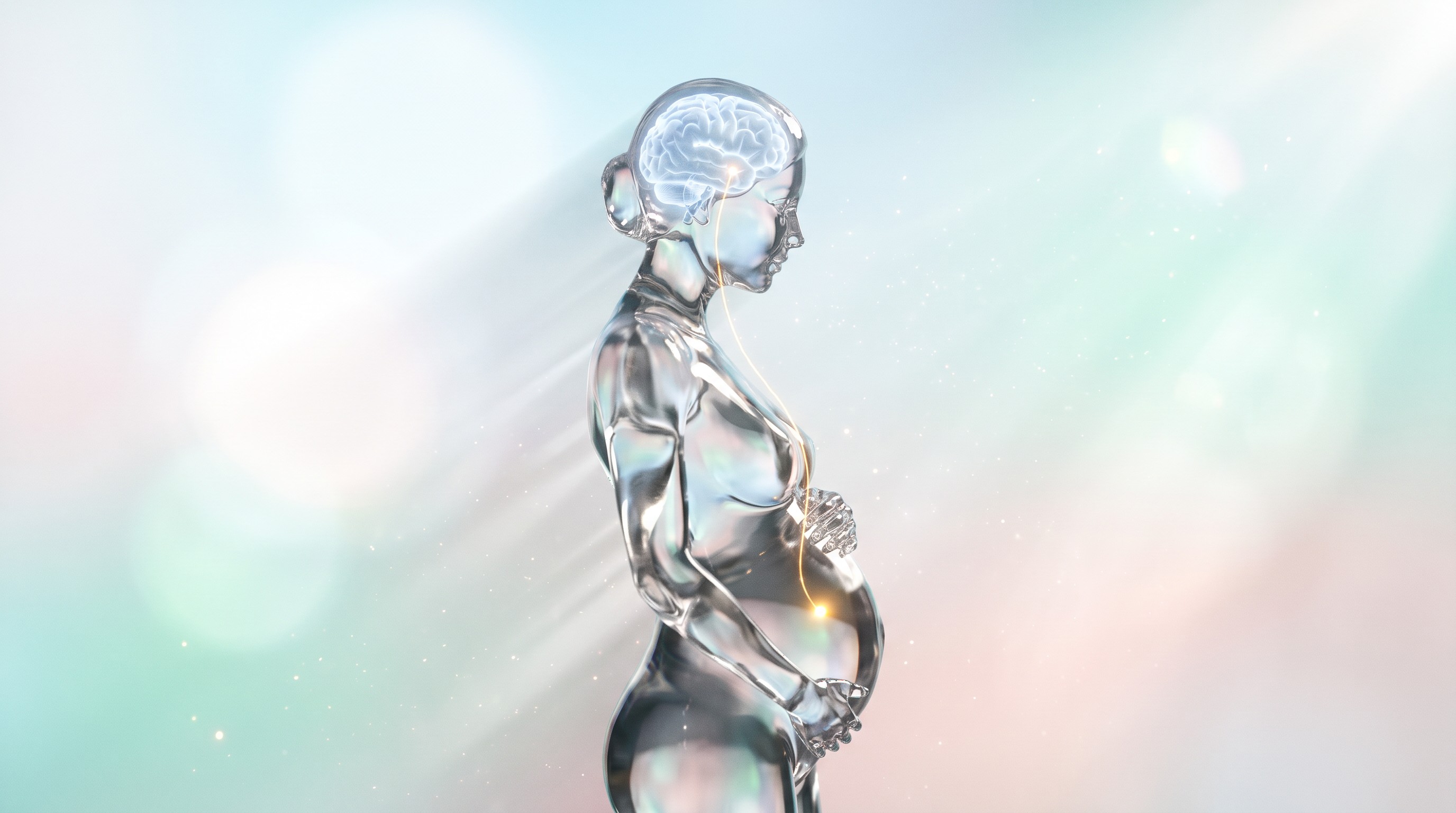
Once pregnancy begins, the fetus continually reads signals from maternal blood: nutrients, glucose, oxygen, stress hormones, and inflammatory messengers. It adjusts its development to the world those signals predict. High maternal blood sugar, severe stress, and low birth weight are each associated with higher metabolic, cardiovascular, and mood risks decades later, through epigenetic changes among other mechanisms.
The fetal brain depends on maternal thyroid hormone until the fetal thyroid matures around mid pregnancy. The placenta makes an enzyme that inactivates most maternal cortisol, a shield that severe chronic stress can weaken. The third trimester brings rapid brain growth and DHA accumulation. And around mid pregnancy, a daughter is building the egg supply of the next generation.
Programming is a tendency, not a sentence. The life of the child continues to shape expression. But the prenatal months set the starting settings, and pregnancy is the time for nourishment, stability, and regulation, never for binders, chelation, or detox teas. The father matters here too: a smoke free home, chemicals left at work, painting and litter box duty taken on, and a share of the mental load that makes her recovery time real.

A Twelve Week Plan for Two
One full cycle of sperm production and egg maturation is about twelve weeks. Here is the sequence I use:
Week 1: mindset, epigenetics, a readiness assessment, and baseline labs for both partners
Week 2: reduce incoming exposures and replace the five to ten biggest sources
Weeks 3 and 4: food as epigenetic signal, methylation nutrients, steady blood sugar
Weeks 5 and 6: mitochondria and energy: sleep, light, movement, and heat avoidance for him
Weeks 7 and 8: gut, microbiome, and gentle drainage, with no aggressive detox
Weeks 9 and 10: hormones, brain, and immune balance, with daily nervous system practice
Weeks 11 and 12: repeat the assessment and key labs, and prepare the conception window
For her, I look at AMH, FSH, LH, and estradiol early in the cycle; progesterone about seven days after confirmed ovulation; a full thyroid panel with antibodies; fasting insulin and HbA1c; iron, vitamin D, B12, RBC folate, and homocysteine. For him, a semen analysis with DNA fragmentation; testosterone, LH, FSH, estradiol, and prolactin; thyroid; fasting insulin and HbA1c; vitamin D, zinc, selenium, omega 3 status, and homocysteine. Both partners receive an exposure history and a comprehensive functional neurological exam. Complex situations such as recurrent loss, PCOS, endometriosis, autoimmunity, or male factor often need more than twelve weeks, and I coordinate with reproductive specialists, urologists, and obstetric teams throughout.
None of this guarantees an outcome. Fertility is shaped by many forces. What you can shape is the environment your cells are built in, and that turns out to be a great deal.

Download the Free Ebook
Everything in this article is expanded in my new sixty page guide, Two Lineages, One Child: what sperm and egg carry beyond DNA, how imprinting and reprogramming work, methylation for both partners, the toxic bucket for two, the nervous system signal, immune tolerance, fetal programming, and the complete twelve week plan with testing lists, a readiness check for both of you, and questions to bring to your appointment. Every major claim is labeled as established, emerging, animal research, or hypothesis, so you always know how strong the evidence is.
You can also find all of my free guides on the Resources page, including Environmental Health Before Pregnancy and The Resonant Fertility Foundation Checklist.
Your child will inherit two lineages. Each carries the history of everyone before you, and each is still listening to how you live today. Preparing both partners is not about perfection. It is about giving the next generation the clearest possible signal: safety, nourishment, and rhythm.
Book your Comprehensive Functional Medicine Eval/Neurological Exam today to discover what the contributing root causes are that are underlying your health concerns.
Comments