
You Are Living in Biological Darkness


Step outside at noon on a cloudy day, and you are standing in perhaps ten thousand lux of light.
Step back inside to your bright, well-lit office, and you are in about three hundred.
Your eyes adapt so beautifully that you never notice the difference. To your conscious mind, the room seems perfectly bright. To your biology, you have just stepped into a cave. The drop may be a factor of thirty or more, and on a clear day it can be one hundred times.
Then the sun goes down. Your ancestors would have sat with firelight, a dim, orange glow. You sit under ceiling lights, in front of a television, holding a glowing rectangle a foot from your face.
We have managed something that no other living creature on Earth has ever done. We have reversed the signal. We live in dim days and bright nights. That is biological darkness.
I do not think that this is a minor lifestyle detail. I think it may be one of the largest uncontrolled biological experiments ever run on human beings. Light is not simply how you see. It is a signal, one of the most powerful in your physiology, that tells every cell in your body what time it is.
Light is a nutrient. Most of us are deficient by day and overdosing at night.
The Third Eye You Did Not Know You Had
For more than a century, we believed that the eye had two kinds of photoreceptor: rods and cones. These are the cells that let you see images.
Then, around the year 2002, scientists confirmed something astonishing. A small fraction of the ganglion cells in your retina are themselves sensitive to light, and they use a photopigment called melanopsin. These cells are called intrinsically photosensitive retinal ganglion cells. They are not involved in forming images. They are measuring brightness, and they are most sensitive to blue light, at a wavelength of about 480 nanometers, the color of the morning sky.
This explained a mystery. Some people who are completely blind, with no functioning rods and cones, still had their melatonin suppressed by bright light. Their brains were still receiving the signal.
Those cells connect directly to a tiny structure in your hypothalamus called the suprachiasmatic nucleus. It contains about twenty thousand neurons, and it sits just above the point where the optic nerves cross. This is your master clock.
The master clock then coordinates the rest of the body. From there, signals pass to the pineal gland, which produces melatonin, and to the adrenal glands, the autonomic nervous system, body temperature, and appetite.
Those same light-sensing cells also project to brain regions involved in mood and alertness, which may help explain why bright light can directly lift your state.
You Are a Collection of Clocks
The discovery of the molecular clock was recognized with a Nobel Prize in 2017. Inside nearly every cell in your body, a set of genes, including CLOCK, BMAL1, PER, and CRY, runs a feedback loop that takes about twenty-four hours to complete.
These clocks control an astonishing amount. A large share of genes in the body are expressed with a daily rhythm in at least one tissue. Your liver, your gut, your pancreas, your muscles, your skin, and your immune cells each have clocks. Your insulin sensitivity is higher in the morning. Your gut motility and enzymes have rhythms. Your immune cells move through the bloodstream on a schedule. DNA repair, cell division, and even the effectiveness of certain vaccines and drugs may vary with the time of day.
The master clock in your brain is the conductor, and light is its cue. Food timing cues the peripheral clocks of the gut and the liver. When light, meals, sleep, and movement all agree, the orchestra plays together.
When they do not, you get circadian misalignment. You have felt this if you have ever had jet lag. Your brain thinks it is one time, your gut another. You feel terrible, and this is the whole body playing different songs.
Now consider someone who wakes in a dark room, works under dim lighting, eats dinner at nine, and scrolls until midnight. That person has mild jet lag every day of their life. Researchers call one form of this social jet lag, when your sleep schedule differs between workdays and weekends.
What Morning Light Does
The most powerful single thing you can do for your clock is free, and it takes about ten minutes.
Morning light within an hour or so of waking anchors your master clock. It helps time the natural cortisol rise that wakes you, and it sets a countdown of roughly fourteen to sixteen hours until melatonin rises again. In other words, your sleep tonight begins with your eyes this morning.
Bright light through a window is far weaker than outdoor light, since glass filters out part of the light and interior levels fall quickly as you move away. So I ask you to go outside. Even a cloudy morning usually gives you much more than the brightest room in the house. You need not stare at the sun. You should not. Simply face the sky, without sunglasses if your eyes tolerate this and your eye doctor agrees.
Research has associated more daytime light exposure with better sleep, better mood, and better alertness. Bright light therapy is an established treatment for seasonal affective disorder, and it has been shown to help non-seasonal depression too. Older adults with dementia in residential care have benefited in some studies from brighter daytime environments, including through more consolidated sleep.
What Nighttime Light Does
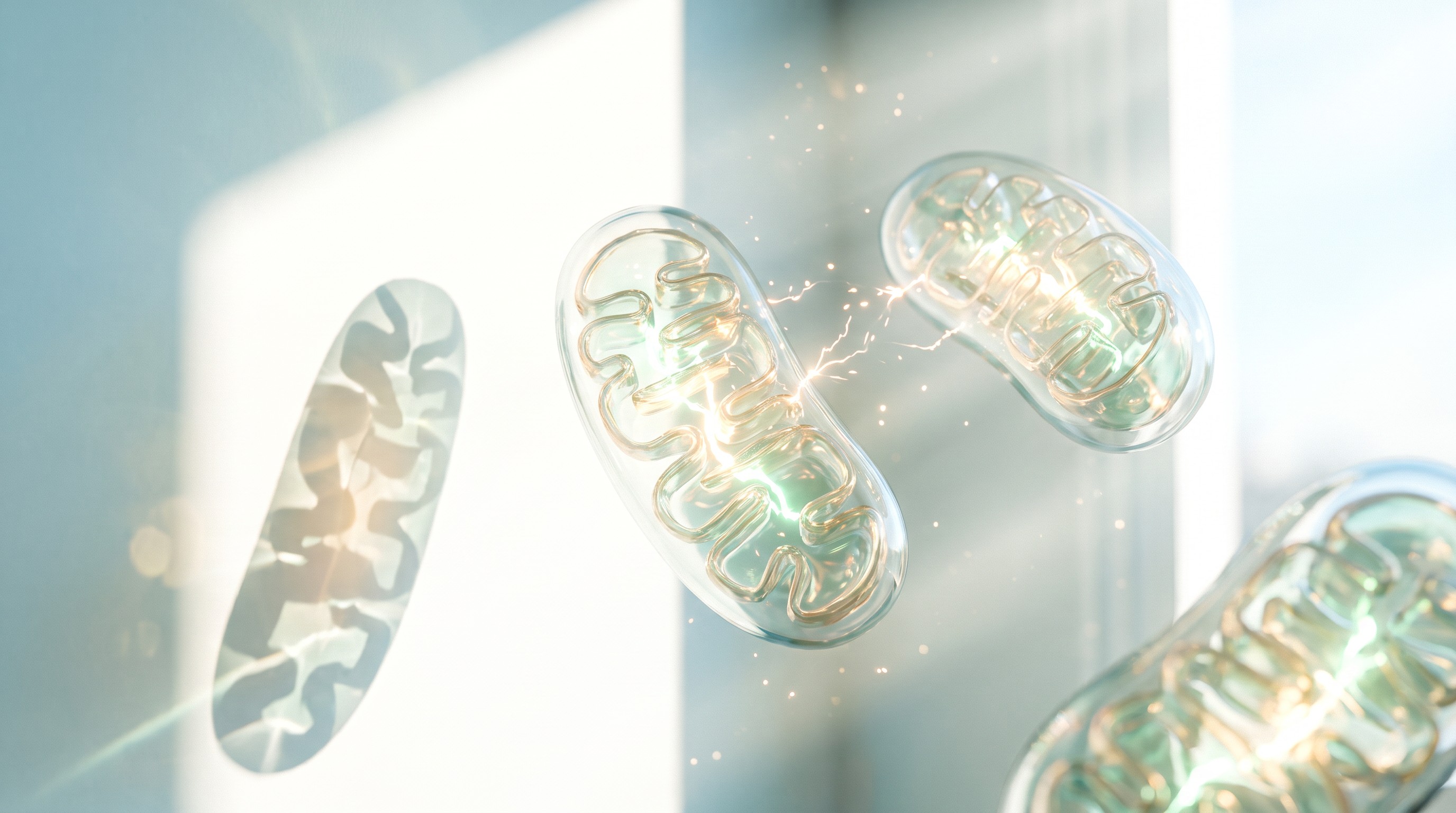
Now the other end of the day. In your evening, the same melanopsin cells remain on duty. Ordinary room light before bedtime has been shown in research to suppress melatonin and delay its onset. Screens add to this, particularly when held close. Melatonin is often called the sleep hormone, but it is better thought of as a darkness signal, and it is also a potent antioxidant within mitochondria.
The issue is not only falling asleep. A growing body of research associates brighter nights with worse health. A large wearable sensor study of tens of thousands of adults found that greater exposure to light at night was associated with a higher risk of type 2 diabetes, independent of many other factors. Other large studies have reported links between nighttime light and mood disorders and with cardiovascular risk. One small experiment found that sleeping one night with a moderate light on raised next-morning insulin resistance in healthy young adults.
These are associations in the main, and they should be held with appropriate caution. Yet night shift work has been classified by an international cancer research agency as probably carcinogenic to humans, in part because of circadian disruption. Your body takes this seriously.
Blue-light blocking glasses are often advertised as the fix, though the evidence is mixed. Total brightness matters more than the color alone. The practical answer is simpler: dim the whole environment after sunset, use warm low lamps, and keep overhead lights off. Make the bedroom truly dark. If you must get up at night, use a dim red or amber light.
Full Spectrum: The Rest of the Sunlight
Sunlight also contains wavelengths that a typical LED room lacks.
Ultraviolet B light allows your skin to produce vitamin D. Sunlight also releases nitric oxide from stores in the skin, and this may lower blood pressure, a finding that has helped to spark debate about sun avoidance. Observational studies from Scandinavia have found associations between avoiding the sun and higher all-cause mortality, although interpretation is complicated.
Near-infrared light penetrates tissue, and it is abundant in morning and evening sun and in firelight, yet very low in modern LED lighting. Laboratory research and some early human studies suggest that these wavelengths may interact with mitochondria, particularly through cytochrome c oxidase. This remains an emerging field.
My position is balanced. Sunburn is harmful, and skin cancer is real, especially for fair-skinned people and for those with a personal or family history. Protect your skin in the intense midday sun. But do not treat the sun as your enemy. A sensible, gradual, non-burning relationship with the morning and late afternoon sun is a biological conversation that humans have been having since the beginning.
Children and Their Growing Eyes
One of the clearest light stories in all of medicine involves your child.
Nearsightedness, or myopia, has been rising dramatically around the world. Long assumed to be a matter of genetics and near work, it is now strongly linked with too little time outdoors. Randomized trials in schools found that adding outdoor time reduced the onset of myopia. Bright outdoor light seems to stimulate retinal dopamine, which slows the elongation of the eyeball. Many eye experts now recommend around two hours a day outdoors.
Two hours a day. For the eyes. No supplement can do this, and most children are getting nowhere near it.
Babies are also born without a developed circadian rhythm. Over the first months, they build one through exposure to light by day, darkness by night, feeding patterns, and contact with their mothers. So take that baby outside during the day and let the nights be dark and dull. Keep nightlights dim and warm. Melatonin in breast milk rises at night, which suggests that human milk carries its own time signal.
Teenagers naturally experience a delay in their clocks. Their melatonin rises later, which makes an early school start biologically difficult. A teenager who cannot get up may not be lazy. They may be living in a different time zone. Morning light, a screen curfew, and a consistent schedule can help considerably. Research on later school start times has shown improvements in sleep and attendance.
For mothers in the postpartum months, morning walks outside can help mood and sleep, and they cost nothing.
Our brain is the master system, at any age, and the clock inside it needs the sky.
The Circadian Plan
Here is the sequence that I give patients. It may seem simple, but very few people do it consistently.
First, get outside in the morning, within an hour of waking, for at least ten minutes, and for longer on cloudy days.
Second, get outside again at some point during the day. Move your desk toward a window. Take your calls on foot.
Third, eat during daylight. Have your largest meals earlier and finish eating at least a few hours before bed, since late meals confuse the clocks of the liver and the gut.
Fourth, watch the sun go down when you can. Late-afternoon light may help to prepare your eyes and your clock for evening.
Fifth, dim the environment after sunset. Reduce overhead lighting and put away bright screens at least an hour before bed.
Sixth, make your bedroom completely dark, and keep your wake time consistent, including on weekends.
The Season You Are In
Your biology also tracks the seasons. As days shorten, the duration of nighttime melatonin secretion can change, and the master clock reads the length of the day. Seasonal affective disorder, the winter depression that many people know well, is more common at higher latitudes, and it can respond strongly to bright light therapy in the morning, as guided by a clinician.
Even without a formal diagnosis, many people experience a winter slump in energy, appetite, and mood. Long winters spent indoors make this worse, since your exposure to natural light can fall to a very low level. Winter is exactly the time to take your walk at midday, to sit by a bright window, and to discuss a suitable light box with your clinician if your mood falls every year. Light boxes are not safe for every person, including those with certain eye conditions or bipolar disorder.
Vitamin D also tends to fall during winter. At many latitudes, the winter sun is too low to allow your skin to make very much of it. I test rather than guess, since both too little and too much carry risks.
Spring has its own effects. Rapidly lengthening days can bring energy, and for some sensitive people, agitation and poor sleep. People with bipolar disorder need particular care in that transition.
What a Modern Home Could Look Like
I would like to see the idea of light hygiene become as natural as brushing your teeth. A home designed around the sky would be brighter by day and much dimmer by night.
Open the curtains the moment you wake. Eat breakfast by the brightest window. Put your workspace near daylight. Replace some cold overhead bulbs with warm lamps in the rooms you use at night. Put your phone charger outside the bedroom. Use blackout curtains if a streetlight reaches your pillow.
Offices, schools, hospitals, and nursing homes could be transformed by the same idea. Hospital patients recover in rooms where lights never fully go off and where days can look the same as nights. Older adults sit indoors in dim rooms and wonder why they cannot sleep. A growing number of designers are now working on lighting that follows the day, and I think this is one of the quietest and most important public health frontiers we have.
If you are caring for an aging parent, a brighter morning routine may be among the kindest and most effective things you can do.
Light is one of the few medicines that arrives every day, free of charge. It only asks you to step outside.
When the Rhythm Is Still Broken
For some of my patients, these steps do not resolve things. That is where deeper evaluation comes in. Is there sleep apnea? Is there a blood sugar crash at night? Is low ferritin causing restless legs? Has perimenopause changed sleep? Has a concussion disturbed the sleep-wake circuitry? Light sensitivity after brain injury can make morning sun very difficult, and it needs to be dosed slowly.
Some people are natural night owls, and that deserves respect. Genes influence your chronotype. Night workers must make the best of a very difficult situation, and I can help them plan around it.
Through a comprehensive functional neurological exam, I look at how your pupils respond to light, how your brainstem and hypothalamus are regulating, and how your autonomic system changes through the day. Through a Functional Medicine lens, I look at cortisol patterns, fasting insulin, thyroid function, vitamin D, and toxic burden. We then build a plan to reduce neuroinflammation and rebalance neurotransmitters, with light as one of our primary tools.
Come Back to the Sky
I grew up on an organic farm in the Ozarks, and I return to that land now. I have spent a great many mornings watching the sun come over the ridge, and I have felt what it does to me. By the third day away from screens, under open sky, I sleep differently. My whole system exhales.
Nothing mystical is required to explain this, even though it often feels sacred. Researchers have taken people camping, away from artificial light, and found that their internal clocks shifted within days to align with the sunrise and sunset.
Your body has been waiting for that signal your whole life.
Go outside tomorrow morning. Let the sky set your clock. Do this for one week and notice what changes.
Your sleep can deepen. Your mood can rise. Your cells can finally know what time it is.
If you want to feel what real darkness does, OZK Cabins sits less than five miles from the Buffalo National River, an International Dark Sky Park, where the night sky still goes fully dark.
Schedule Your Comprehensive Functional Neurological Exam Today
Book your Comprehensive Functional Medicine Eval/Neurological Exam today to discover what the contributing root causes are that are underlying your health concerns.
Begin at drleiladoolittle.com. I see patients by telehealth and in person in Dallas, Texas and Compton, Arkansas.


Comments